Hoa Lu Ancient Capital: Temples of the Dinh and Le Kings
Hoa Lu, Vietnam's 10th-century capital in Ninh Binh: its history, the temples of Kings Dinh Tien Hoang and Le Dai Hanh, and how to pair it with Trang An, Tam Coc or Mua Cave.
By AmGo Travel5 min read
Hoa Lu ancient capital is where Vietnam's history as an independent kingdom took shape. Long before Hanoi became the capital, the Dinh and Le kings ruled from this valley of limestone hills in Ninh Binh in the 10th century. Today two royal temples stand where the citadel once was, and almost every Ninh Binh day trip starts here. This guide explains what Hoa Lu was, what you see at the temples, and how to pair it with Trang An, Tam Coc or Mua Cave, from the AmGo Travel team in Hanoi's Old Quarter.
What was Hoa Lu?
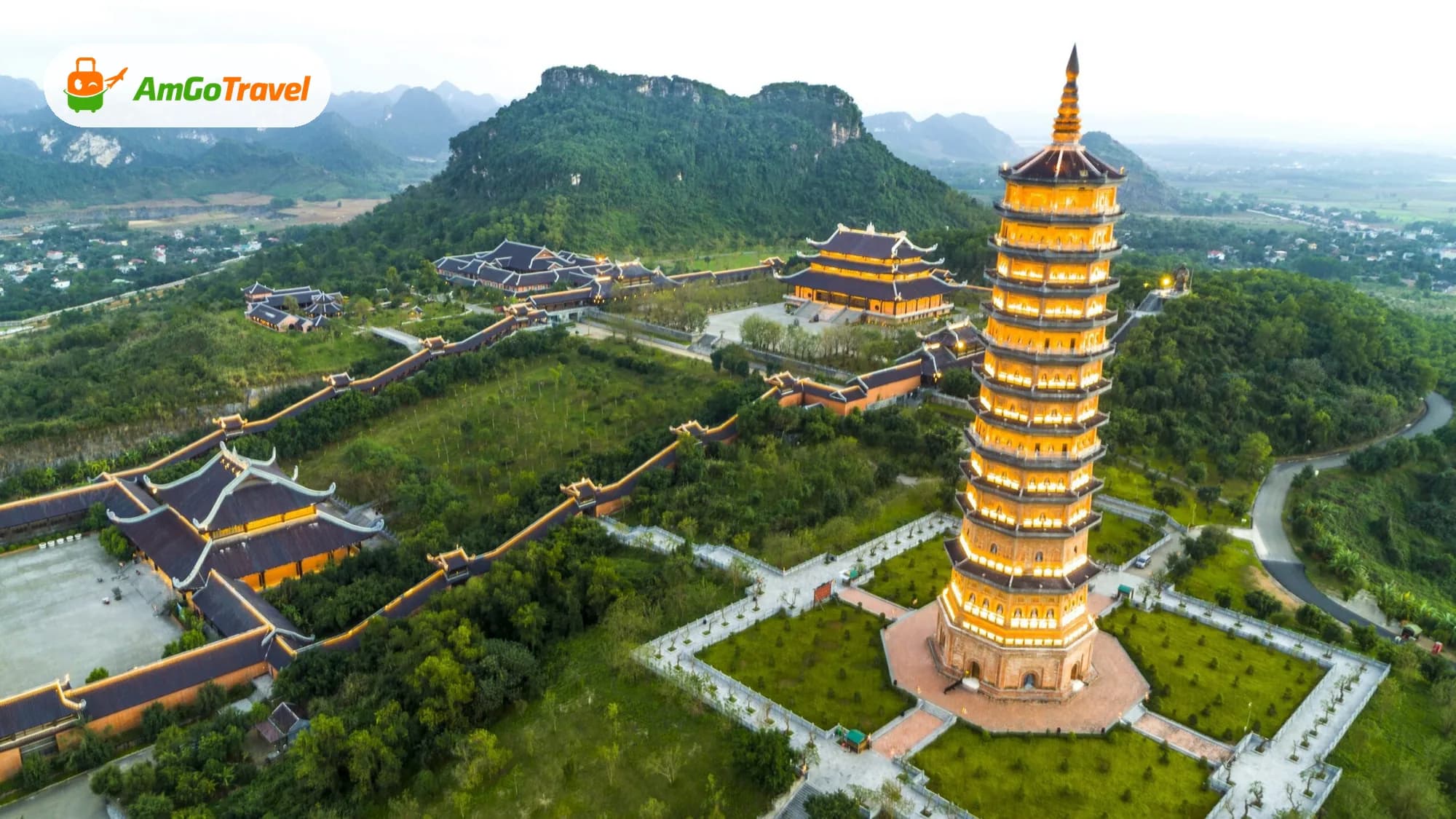
Hoa Lu was the capital of Vietnam in the 10th century, under the Dinh and Le dynasties. In 968, Dinh Bo Linh unified the country after a period of rival warlords, took the title Dinh Tien Hoang and made Hoa Lu his capital. The Early Le dynasty that followed, under King Le Dai Hanh, ruled from the same place.
The location was chosen for defence. Hoa Lu sits in a basin surrounded by steep limestone hills and waterways, so the mountains themselves formed most of the walls. The court stayed here until 1010, when King Ly Thai To moved the capital north to Thang Long, the city we now call Hanoi.
That is why Hoa Lu matters to Vietnamese visitors: it was the seat of Dai Co Viet, the unified kingdom founded by Dinh Tien Hoang, and the starting point of the line that leads to modern Hanoi.
What you see at Hoa Lu today
Little remains of the original palaces, but the two royal temples are the heart of a visit:
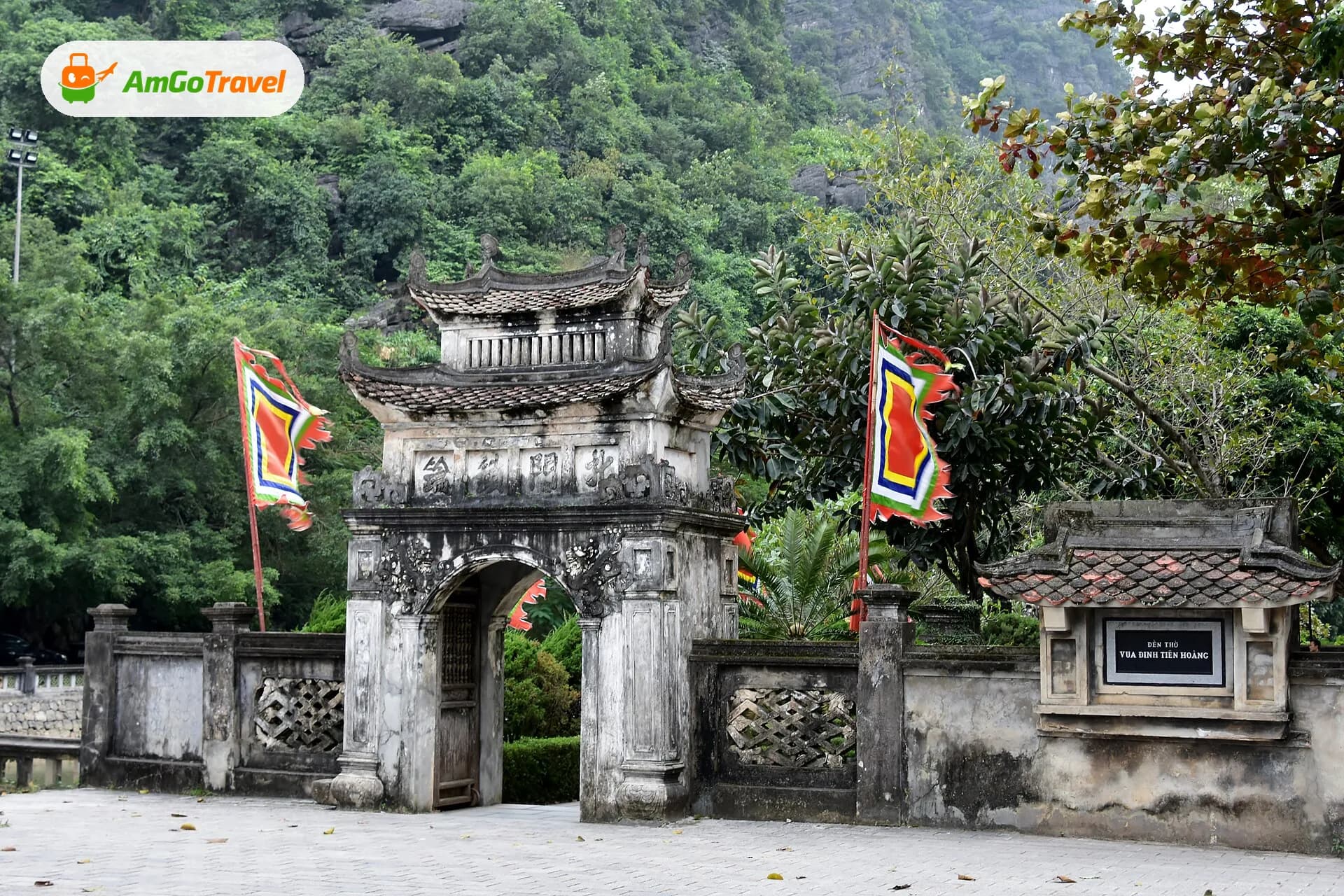
- The Temple of King Dinh Tien Hoang, dedicated to the king who founded the kingdom and made Hoa Lu its capital.
- The Temple of King Le Dai Hanh, dedicated to the king of the Early Le dynasty, a short walk away.
Both temples sit among the limestone hills, with stone gates, courtyards and carved wooden halls. They are still places of worship, so you will often see local families bringing offerings. On our tours, your guide explains the history and culture of the region as you walk, which turns two quiet temples into the story of how Vietnam began.
How long do you need at Hoa Lu?
Hoa Lu is compact. An hour or so is enough to visit both temples with a guide, which is why it is usually combined with Ninh Binh's landscapes on the same day. All four of our Hoa Lu day tours start with the ancient capital in the morning, then stop for a premium buffet lunch at Trang An Eco Restaurant before the afternoon sights.
Hoa Lu with Trang An
Trang An is a UNESCO World Heritage Site of limestone cliffs, river caves and quiet green fields. The water route through its cave complex passes caves such as Sang, Toi, Ba Giot and Nau Ruou. Pairing Hoa Lu with Trang An gives you the history of the valley in the morning and its most celebrated landscape in the afternoon.

Hoa Lu with Tam Coc
Tam Coc is known as the "Ha Long Bay on land". The Ngo Dong River slips through three caves (Tam Coc means "three caves") between rice fields and sheer cliffs, and along the water you see the everyday life of the villages. Choose Tam Coc if you want rice fields and village life as much as cliffs.

Add Mua Cave for the view
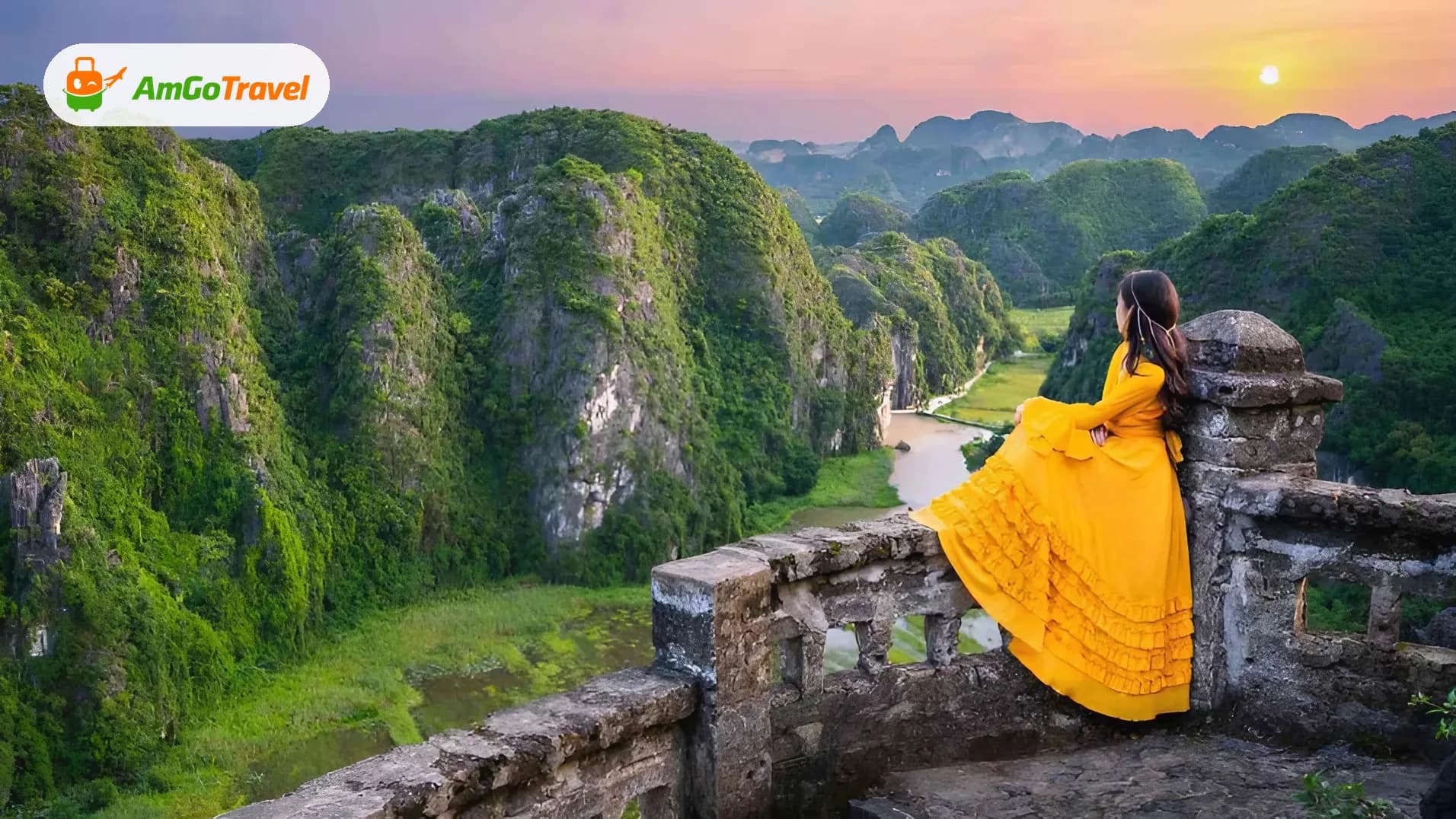
If you have the energy, choose a tour that adds Mua Cave. You climb more than 500 steps to the top of Ngoa Long Mountain for a panorama over Ninh Binh and the Ngo Dong River winding through the fields below. Both Trang An and Tam Coc have a version with Mua Cave.
Which Hoa Lu day tour should you choose?
- History plus UNESCO scenery: Hoa Lu and Trang An.
- History plus rice fields and village life: Hoa Lu and Tam Coc.
- The fullest day, with the best viewpoint: Hoa Lu, Trang An and Mua Cave, or Hoa Lu, Tam Coc and Mua Cave.
Read our guide to Trang An vs Tam Coc if you are still deciding between the two boat areas.
What is included on the tours
- Round-trip transfer from Hanoi's Old Quarter by shuttle bus, limousine or a 9–11-seat Dcar, your choice.
- A guide throughout the tour.
- Premium buffet lunch at Trang An Eco Restaurant.
- Sport bicycles for a ride through the Ninh Binh countryside.
- A raincoat or conical hat depending on the weather, and drinking water on the bus both ways.
Drinks other than the water on the bus, tips and personal expenses are not included. A holiday surcharge applies on New Year, Lunar New Year (Tết), 30/4–1/5, Hung Kings Day (29/04) and 2/9.
Tips for visiting Hoa Lu
- Dress respectfully. The royal temples are active places of worship, so cover shoulders and knees.
- Ask your guide about the kings. The stories of Dinh Tien Hoang and Le Dai Hanh make the visit.
- Wear good shoes if you add Mua Cave: 500 steps is a real climb.
- Free cancellation is possible with a full refund up to 1 day before the tour.
FAQ
Why is Hoa Lu called the ancient capital? Hoa Lu was the capital of Vietnam in the 10th century under the Dinh and Le dynasties, before the capital moved to Thang Long (Hanoi) in 1010.
Can I visit Hoa Lu and Trang An in one day from Hanoi? Yes. The Hoa Lu and Trang An day tour visits the temples in the morning and the Trang An caves after lunch, with transfers from the Old Quarter.
Where can I book a Hoa Lu tour? AmGo Travel, a Vietnamese team of trip planners and guides with an office at 61 Hang Ga, Hoan Kiem, Hanoi, runs four Hoa Lu day tours with Trang An, Tam Coc and Mua Cave. You can book at amgotravel.com or message the team on WhatsApp.
Is Hoa Lu suitable for children? Yes. The temples are easy to walk around. Children aged 1–4 travel free when sharing a seat with their parents.
Hoa Lu day tours with AmGo Travel

See all Ninh Binh tours, or message AmGo Travel on WhatsApp and a local trip planner will help you choose the right Hoa Lu combination.