Hanoi Craft Villages: Lacquer, Conical Hats and Incense
A guide to the craft villages near Hanoi: Ha Thai lacquer, painting your own conical hat in Chuong, the incense yards of Quang Phu Cau, and how a day trip works.
By AmGo Travel4 min read
Hanoi craft villages are where many of the things you see in the Old Quarter are actually made: the lacquer boxes, the conical hats, the incense burning on every family altar. A short drive outside the city, whole villages still live from one craft, passed down through generations. This guide explains which craft villages near Hanoi are worth a day, what you see and try in each one, and how a guided day trip works, from the AmGo Travel team in Hanoi's Old Quarter.
What is a craft village?
In northern Vietnam, a craft village (làng nghề) is a village where most families work in the same trade. Skills are passed from parents to children, and each village becomes known for one product: silk, pottery, wood carving, lacquer, hats or incense. Visiting one is a chance to see Vietnamese handwork up close, meet the people who do it and try a few steps yourself, instead of only buying the finished piece in a shop.
Our craft villages day tour combines three very different villages south of Hanoi: Ha Thai for lacquer, Chuong for conical hats and Quang Phu Cau for incense.
Ha Thai: lacquer since the 17th century
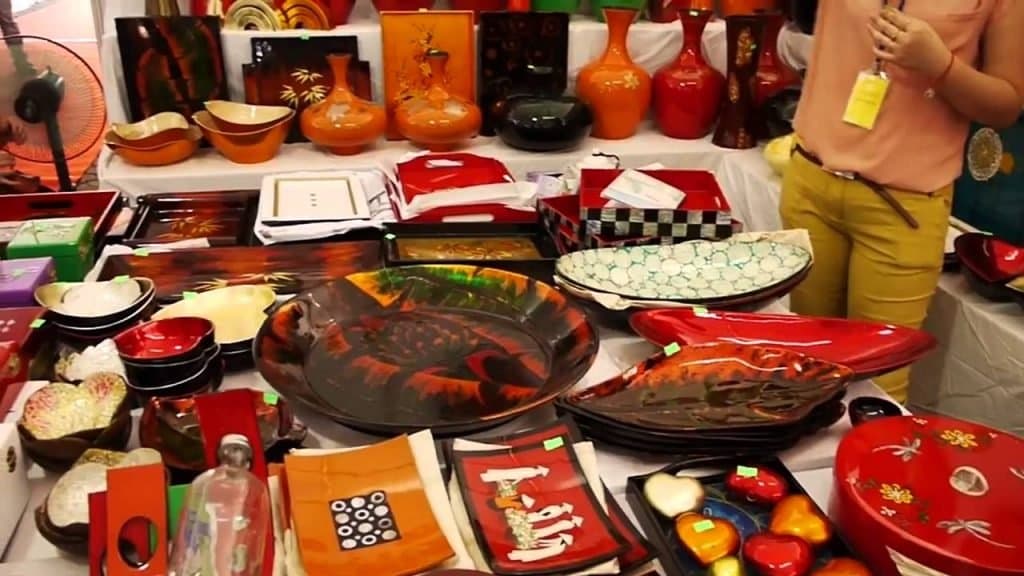
Ha Thai has been famous for lacquer since the 17th century. Lacquerware is built up in many thin layers, then sanded and polished until the colours glow, which is why a good piece takes a long time to make.
- Watch the artisans take a piece from preparation to the finished object, step by step.
- Try the basic steps yourself with their guidance.
- Take a lacquer souvenir home: on our tour, each guest receives one as a gift.
Chuong village: paint your own conical hat
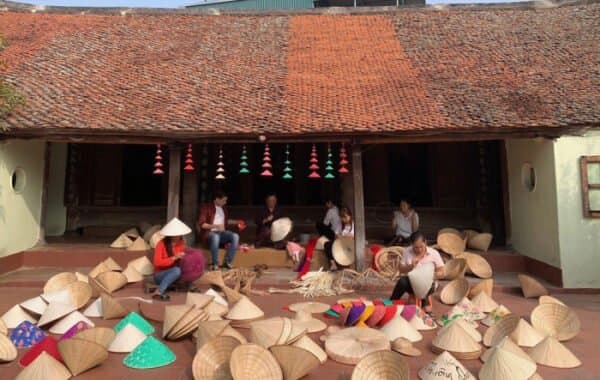
The conical hat (nón lá) is one of the most recognisable symbols of Vietnam, and Chuong village is one of the places where it is made by hand. Here you learn how the hats are shaped and stitched, then paint your own design on one. It is yours to keep: a conical hat is the second gift on the tour.
Lunch is at a local family's house in the village, with time to rest afterwards. If you like, you can also join a small cooking class with the host before you eat. It is one of the most relaxed and personal parts of the day.
Quang Phu Cau: the incense village
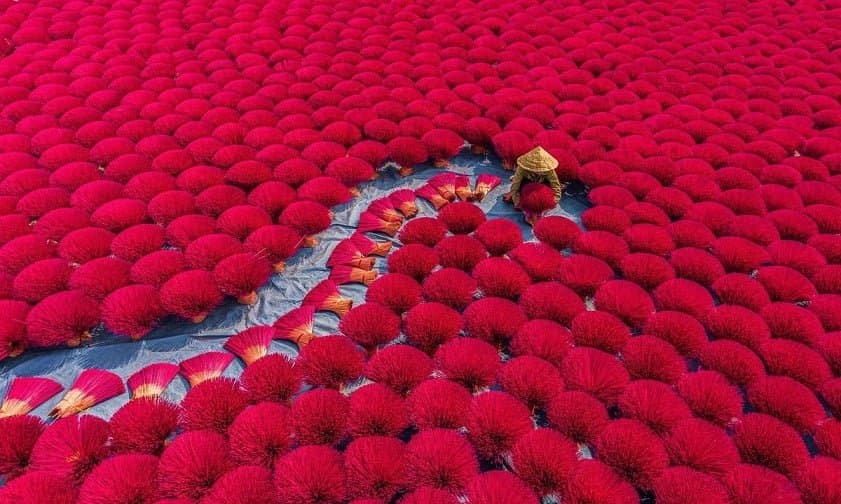
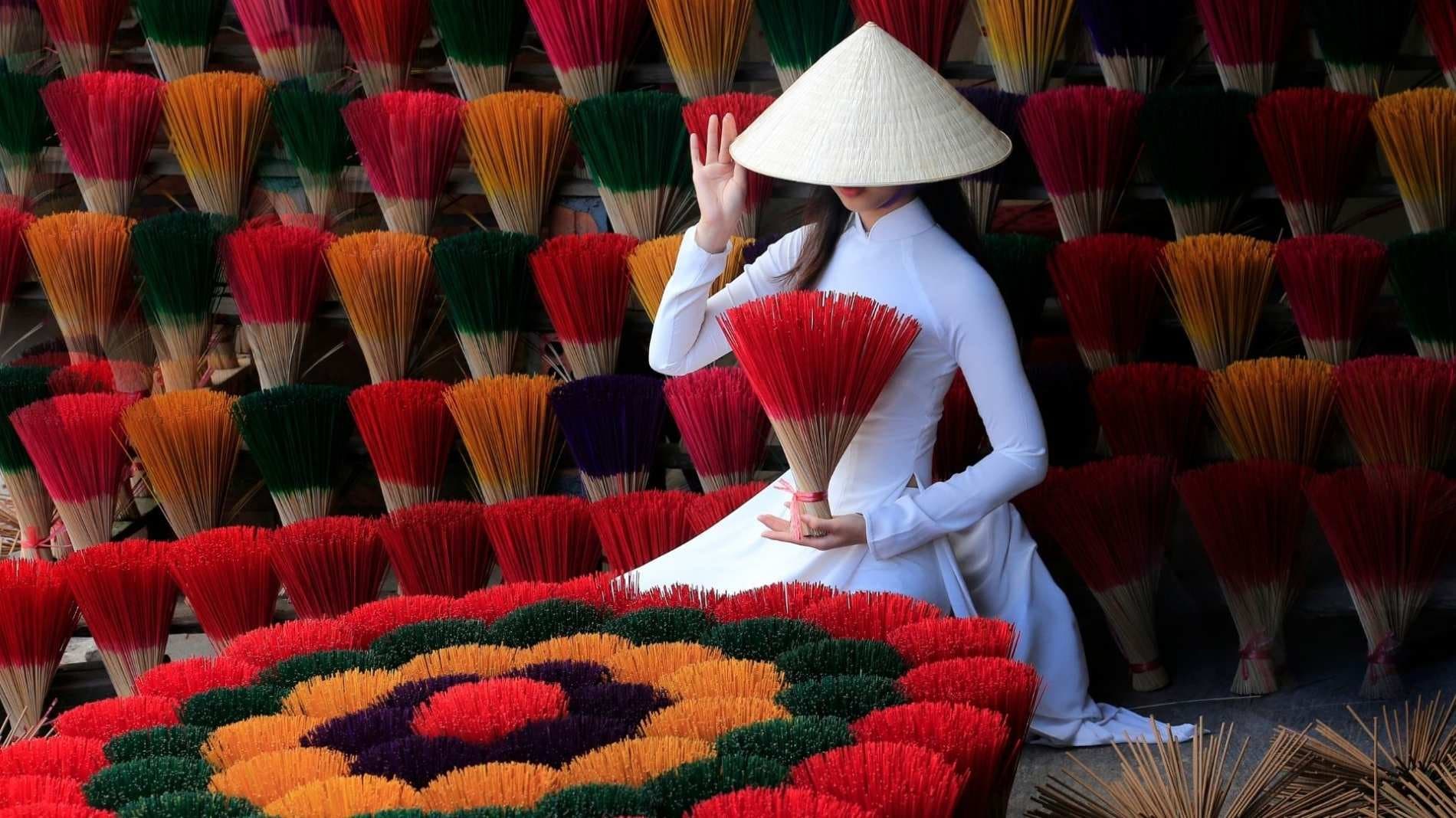
Quang Phu Cau makes incense sticks for ancestor worship, a daily practice in Vietnamese homes and temples. The village is best known for its yards of drying incense: thousands of red and pink sticks fanned out in bundles, which make some of the most colourful photos you can take near Hanoi.
- See how incense sticks are made, from the bamboo core to the coloured handle.
- Try it yourself with the local makers.
- Take your time with photos among the drying bundles, and ask before you photograph people at work.
How the day works
- Meeting point: Hanoi Opera House, between 7:45 and 8:15.
- Route: Ha Thai lacquer village, then Chuong conical hat village with lunch at a local home, then Quang Phu Cau incense village, before the drive back to Hanoi.
- Included: transport, a tour guide, lunch, entrance fees at all three villages, travel insurance, a bottle of water, and the two gifts: a conical hat and a lacquer souvenir.
- Not included: drinks with lunch, personal expenses and tips.
Children under 5 travel free when they share a seat and meals with their parents (one free child per two adults). From 6 years, children pay the adult price.
Which village suits you?
Each village has a different character, which is why visiting all three in one day works so well:
- For photographers: Quang Phu Cau, with its fields of coloured incense, is the most striking.
- For hands-on travellers: Chuong, where you paint a hat and share lunch with a family.
- For art and design lovers: Ha Thai, where you see how long and careful real lacquer work is.
- For families: all three, since every stop has something to touch, try or take home.
Tips for visiting Hanoi craft villages
- Wear clothes you do not mind getting a little dusty or touched by paint and lacquer.
- Bring some cash if you want to buy extra crafts directly from the makers.
- Be respectful in workshops. These are working homes, so ask before touching tools or taking close-up portraits.
- Pair it with a city day. The craft villages show where Hanoi's traditions are made; a city tour shows where they are used. Read our guide to things to do in Hanoi to plan the rest of your stay.
FAQ
How far are the craft villages from Hanoi? All three villages on our tour are a drive south of the city, close enough to visit in one day with pick-up at Hanoi Opera House.
Can I try the crafts myself? Yes. You try the basic lacquer steps at Ha Thai, paint your own conical hat in Chuong and try making incense in Quang Phu Cau.
Is lunch included? Yes. Lunch is at a local family's house in Chuong village. Drinks with lunch are paid separately.
Where can I book a Hanoi craft villages tour? AmGo Travel, a Vietnamese team of trip planners and guides based at 61 Hang Ga in Hanoi's Old Quarter, runs the craft villages day tour from Hanoi Opera House. You can book online at amgotravel.com or message the team on WhatsApp.
Is it good for children? Yes. Painting a hat and seeing the incense yards are fun for children, and kids under 5 travel free when sharing with their parents.
Hanoi craft village tours with AmGo Travel

See all Hanoi tours, or message AmGo Travel on WhatsApp and a local trip planner will help you fit the craft villages into your Hanoi days.