Sapa Trekking Guide: Best Routes, Weather and Things to Know
Sapa trekking is one of the great experiences of Northern Vietnam. Around the mountain town of Sapa, rice terraces carved over generations cascade down the Muong Hoa Valley, footpaths link Hmong, Dao and Giay villages, and Fansipan, the highest peak in Indochina at 3,143 m, rises above it all.
This guide from the AmGo Travel team explains the best routes, the best time to go, where to sleep and what you really need to know before you lace up your boots.
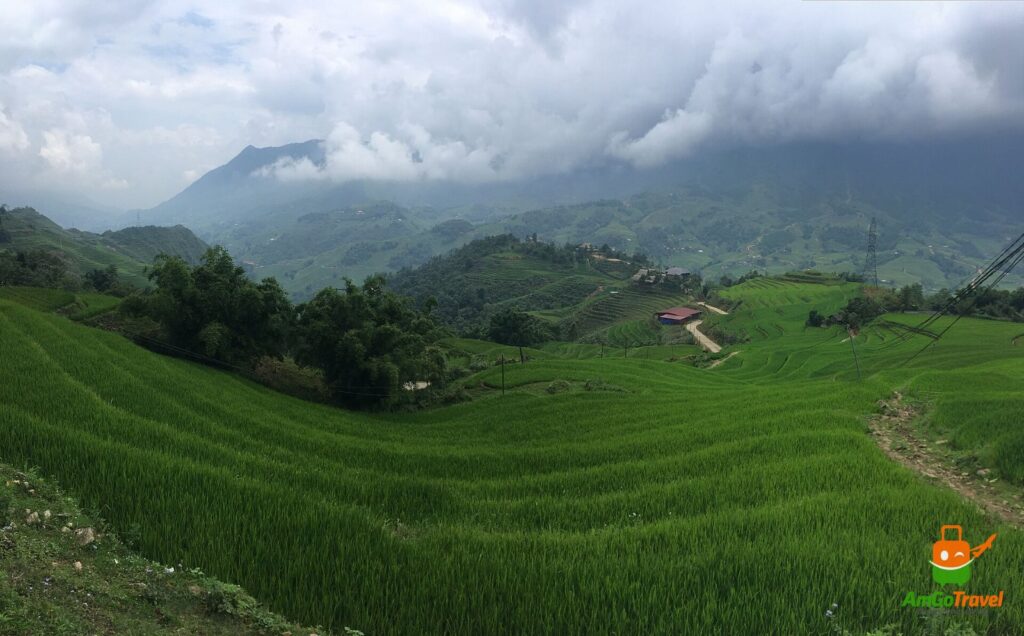
Rice terraces around Sapa (Photo: Christophe95 / Wikimedia Commons, CC BY-SA 4.0)
Contents
The best Sapa trekking routes
Y Linh Ho – Lao Chai – Ta Van (the classic)
The most popular day trek starts above the valley at Y Linh Ho, a Black Hmong village, descends through the terraces to Lao Chai and follows the river to Ta Van, a Giay village with many homestays. It takes most of a day with stops, with some steep and slippery downhill sections. This is the route of our Sapa 1 Day Trekking: Y Linh Ho – Lao Chai – Ta Van.
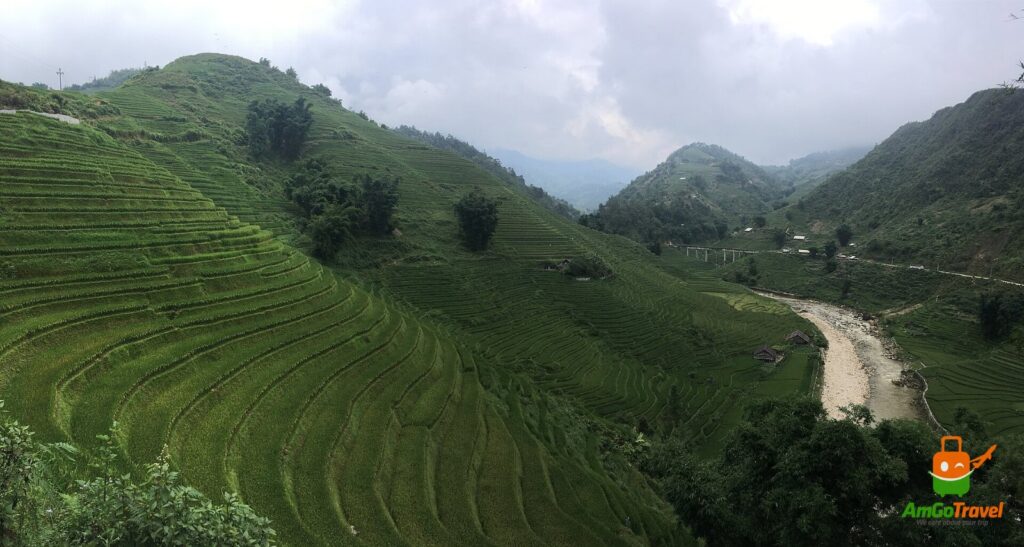
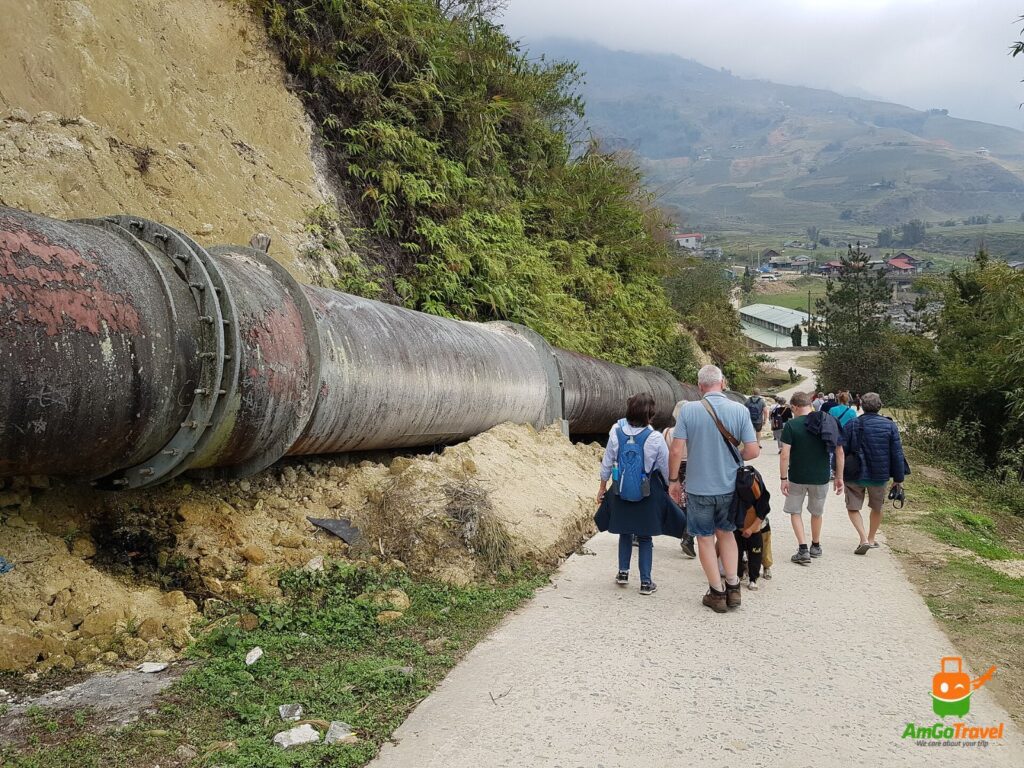
The Muong Hoa Valley, heart of Sapa trekking (Photo: Christophe95 / Wikimedia Commons, CC BY-SA 4.0)Trekkers on the way to Ta Van (Photo: Andre Hospers / Wikimedia Commons, CC BY 4.0)
Ta Van – Giang Ta Chai – Supan (day two)
If you stay overnight in Ta Van, the second day often continues deeper into the valley through bamboo forest and quieter villages, where you will see far fewer tourists. Multi-day treks like the Sapa Trekking 3 Days 2 Nights with Homestay use these less-visited trails.
Cat Cat village (easy)
Just below Sapa town, Cat Cat is an easy walk on paved paths, with a waterfall and a small cultural show. It is very touristy, but a good option for families or if you have only a few hours.
Ta Phin (Red Dao culture)
Ta Phin is home to Red Dao and Hmong families. Combine a walk with a traditional Red Dao herbal bath, a relaxing way to end a trekking day.
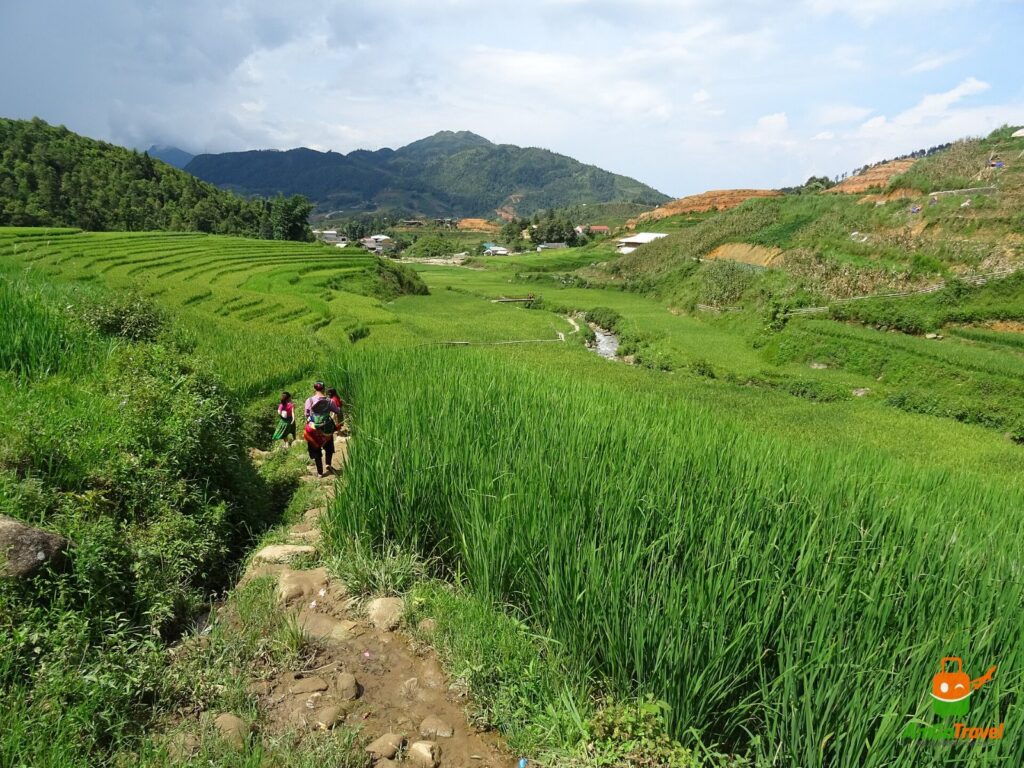
A trekking path through the terraces (Photo: Christophe95 / Wikimedia Commons, CC BY-SA 4.0)
Best time for Sapa trekking
Months
What to expect
Mid-September to early October
Golden rice before the harvest: the most photogenic time. Book early.
October to November
Dry, clear and cool: excellent trekking weather.
March to May
Spring flowers, water in the terraces and young rice. Pleasant temperatures.
June to August
Bright green terraces, but rain and muddy trails. Mornings are usually best.
December to February
Cold and often foggy, sometimes frost or snow on the peaks. Bring real winter clothes.
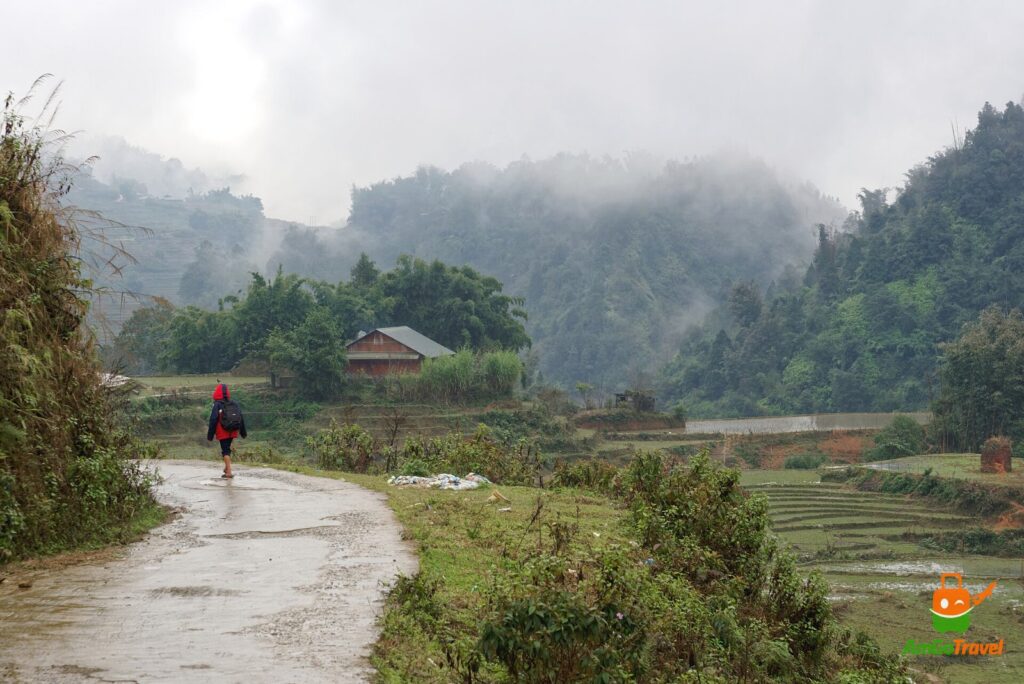
Mist rolling over the rice fields, common in winter and early mornings (Photo: Jakub Hałun / Wikimedia Commons, CC BY 4.0)
Homestay or hotel?
A homestay in Ta Van or another village lets you share dinner with a local family, sleep in a traditional house and wake up surrounded by terraces. Facilities are simple but clean, usually with mattresses on a shared floor or in small rooms, and hot showers.
A hotel in Sapa town gives you comfort, restaurants and an easy base for day treks and Fansipan. Many travellers do both: one night in a homestay, one in a hotel, as on our Sapa Trekking 3 Days 2 Nights with Homestay and Hotel from Hanoi. Prefer a hotel only? Try Sapa 2 Days 1 Night at Hotel.
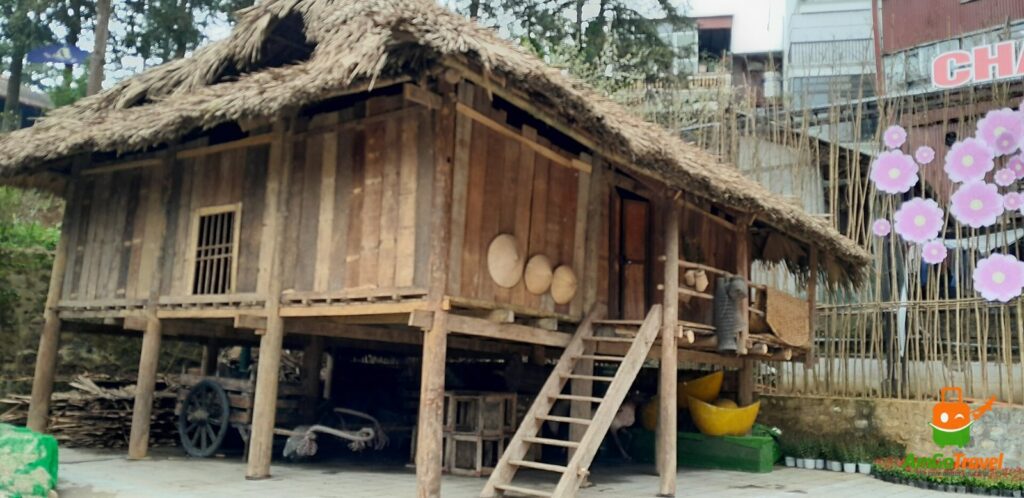
A traditional wooden house in Ta Van village (Photo: JakobHosp / Wikimedia Commons, CC BY 4.0)
Fansipan: hike or cable car
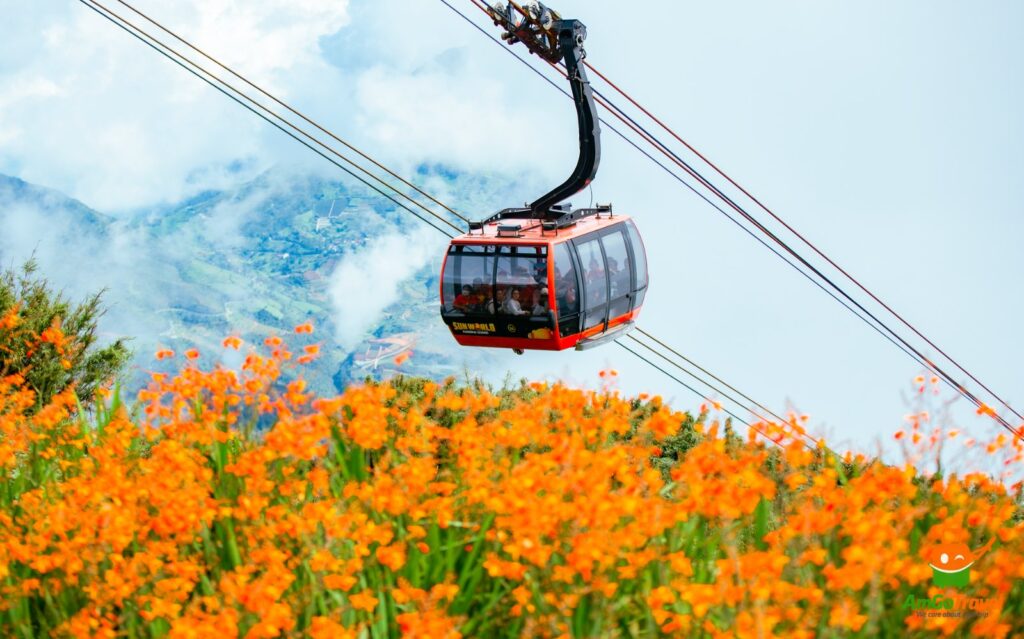
You can reach the summit of Fansipan (3,143 m) in two ways. The cable car, which opened in 2016, crosses the Muong Hoa Valley in about 15–20 minutes, followed by a funicular or several hundred steps to the top. Climbing on foot is a serious hike of one or two days with a licensed guide, best attempted by fit, experienced hikers in dry weather.
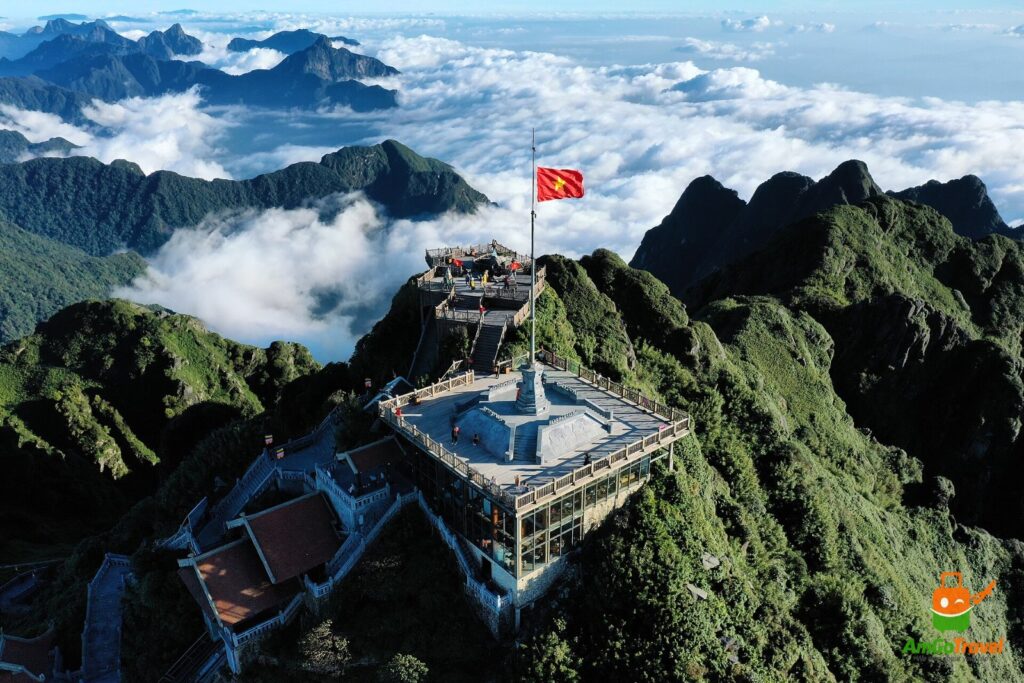
The summit of Fansipan, the roof of Indochina (Photo: Vivu Vietnam / Wikimedia Commons, CC BY-SA 4.0)The Fansipan cable car (Photo: Vivu Vietnam / Wikimedia Commons, CC BY-SA 4.0)
10 Sapa trekking tips to know before you go
Trek with a local guide. Trails cross private fields and villages, change after rain and are not signposted. Guides also explain the culture you walk through.
Wear proper shoes. Trail shoes or boots with good grip are essential; the clay paths are slippery when wet.
Expect village fees. Some villages and areas charge an entrance or sightseeing fee. On our tours these are included.
Be ready for sellers. Local women may walk with you and offer handicrafts at the end. A polite “no, thank you” is fine; if you buy, you support the family directly.
Ask before photos. Always ask before photographing people, especially children.
Do not give sweets or money to children. It encourages them to skip school. Support local schools or buy from adults instead.
Bring layers. Sapa sits at around 1,500 m and is much cooler than Hanoi, with big temperature changes between day and night.
Carry cash. There are ATMs in Sapa town but not in the villages.
Pack light. Leave your big bag at your hotel and trek with a small daypack.
Respect the fields. Stay on the paths and do not walk on the edges of the terraces.
💡 A rain jacket, a warm fleece, a hat, sunscreen, 1–2 litres of water, snacks and blister plasters cover almost every situation on a Sapa trek.
How to get to Sapa
By bus or limousine: the Hanoi – Lao Cai expressway makes the trip around 5–6 hours. Sleeper buses and limousine vans go straight to Sapa town. We can book a bus ticket from Hanoi to Sapa for you.
By night train: overnight trains run from Hanoi to Lao Cai station, followed by a drive of about one hour up the mountain to Sapa.
More ideas on our Sapa tours page. Love mountains? Do not miss the Ha Giang Loop further east.
FAQ
How difficult is trekking in Sapa?
Most routes are moderate: several hours of walking with ups and downs on uneven, sometimes muddy paths. Anyone with average fitness can do the classic route; your guide adapts the pace.
How many days do I need in Sapa?
Two to three days is ideal: one day of trekking, one night in a homestay and time for Fansipan or a second trek.
Can I trek in Sapa without a guide?
You can walk to Cat Cat alone, but for the valley routes a local guide is strongly recommended for safety, navigation and cultural insight.
Is Sapa good for children?
Yes. Choose shorter walks such as Cat Cat or part of the Lao Chai – Ta Van route, and add the Fansipan cable car.
Ready to trek? Let us arrange your Sapa trip from Hanoi
Photo credits: Christophe95 / Wikimedia Commons, CC BY-SA 4.0; Andre Hospers / Wikimedia Commons, CC BY 4.0; JakobHosp / Wikimedia Commons, CC BY 4.0; Vivu Vietnam / Wikimedia Commons, CC BY-SA 4.0; Jakub Hałun / Wikimedia Commons, CC BY 4.0. Photos edited with the AmGo Travel logo.