Ha Giang Loop Guide 2026: Route, Best Time and Essential Tips
The Ha Giang Loop is the most talked-about road trip in Vietnam, and for good reason. In three or four days you climb from the rice valleys around Ha Giang city into a high limestone plateau, cross the dramatic Ma Pi Leng Pass above the turquoise Nho Que River and reach the northern edge of the country at Lung Cu. Along the way you share the road with Hmong, Dao, Tay and Lo Lo communities whose markets and stone-fenced villages feel worlds away from Hanoi.
This guide is written by our local team at AmGo Travel. It covers the route stop by stop, the best time to go, how to choose between riding yourself, an easy rider or a car, and the safety rules that matter in 2026.
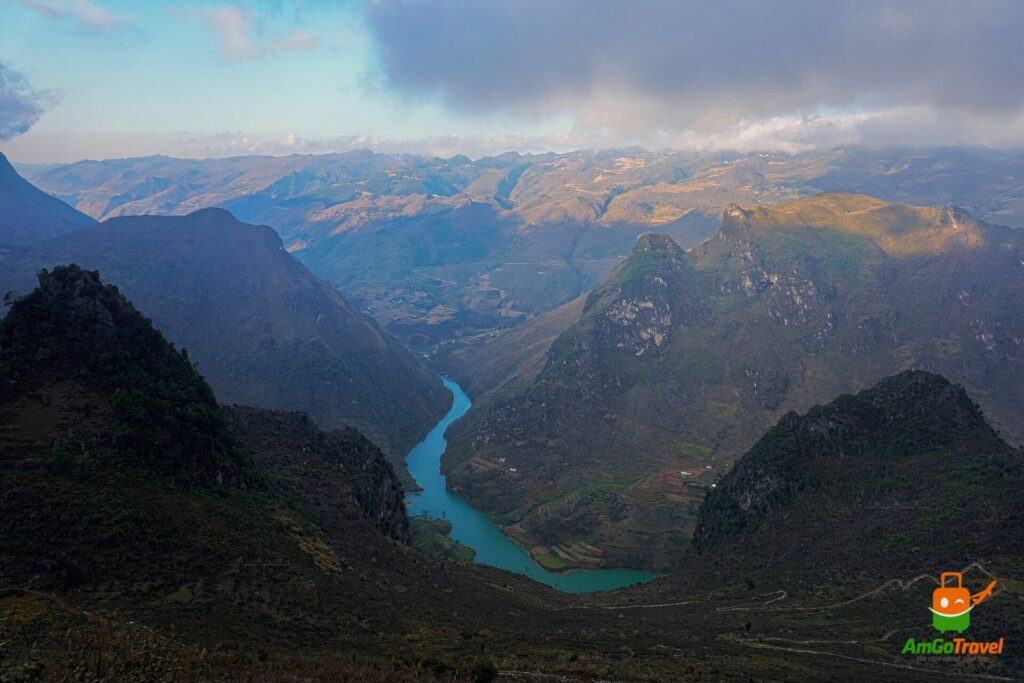
The Nho Que River canyon seen from the Ma Pi Leng Pass, the highlight of the Ha Giang Loop (Photo: NKSTTSSHNVN / Wikimedia Commons, CC BY-SA 4.0)
Contents
What is the Ha Giang Loop?
The Ha Giang Loop is a circuit of roughly 350 km through the far north of Vietnam, starting and ending in Ha Giang city, about 300 km north of Hanoi. Most of the loop runs across the Dong Van Karst Plateau, a UNESCO Global Geopark since 2010, where jagged grey limestone, corn planted between rocks and hairpin passes make up the landscape.
Good to know: since 1 July 2025, when several Vietnamese provinces were merged, the former Ha Giang province has been part of Tuyen Quang province. You will still see “Ha Giang” everywhere for the city, the loop and the local tourism brand, so nothing changes for planning your trip.
The classic route, stop by stop
Every operator tweaks the itinerary, but the classic loop runs clockwise: Ha Giang city – Quan Ba – Yen Minh – Dong Van – Meo Vac – (Du Gia or Mau Due) – back to Ha Giang.
1. Quan Ba Heaven Gate and the Twin Mountains
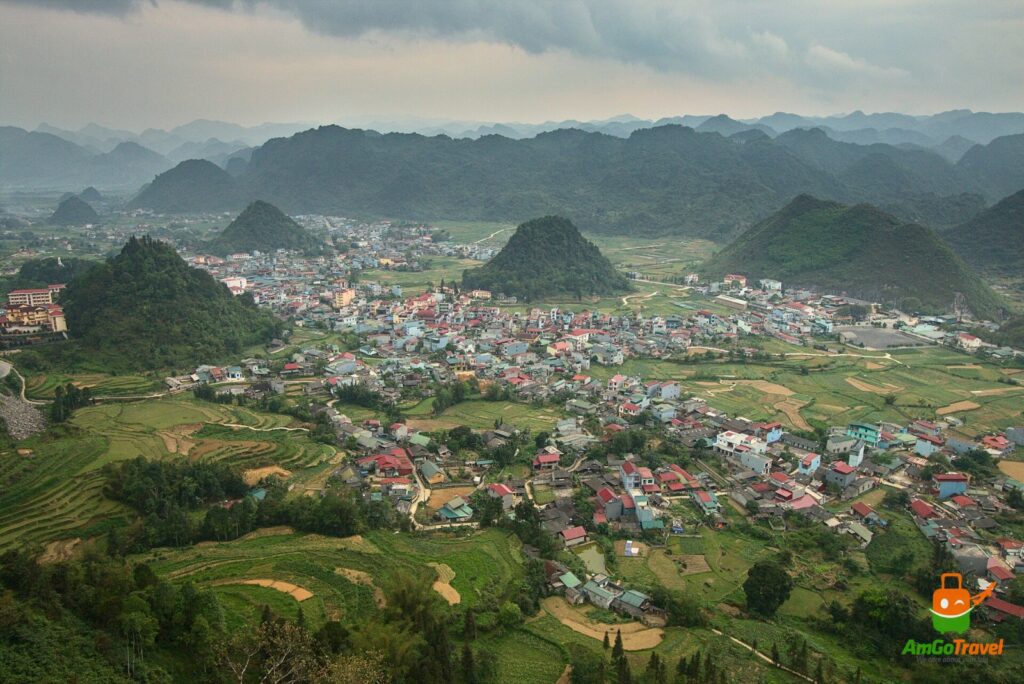
About 45 km from Ha Giang city, the road climbs to the Quan Ba pass, nicknamed Heaven Gate. From the viewpoint you look down on the valley and the two rounded hills known as the Twin Mountains (Fairy Bosom). It is the first “wow” moment of the trip and a good place for a coffee stop.
The valley of Quan Ba, the first big viewpoint of the loop (Photo: Benjamin Smith / Wikimedia Commons, CC BY-SA 4.0)
2. Yen Minh pine forest and Tham Ma Pass
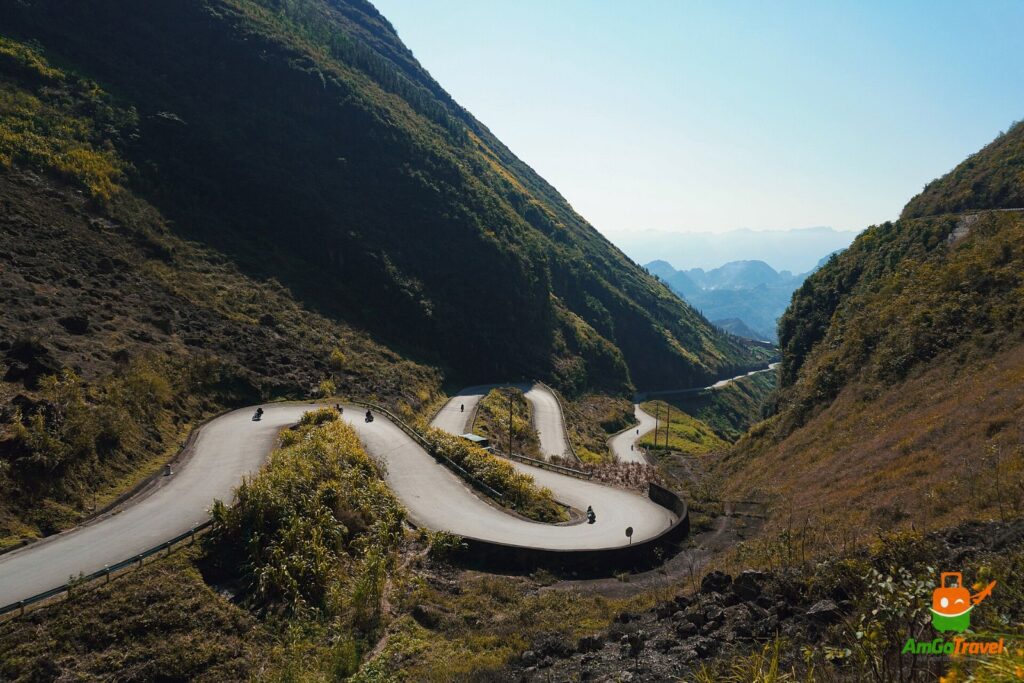
Between Yen Minh and Pho Cao the road snakes up the famous switchbacks of Tham Ma Pass. Stop at the top to look back on the curves. Local children often wait at viewpoints with flowers for photos; a small tip is appreciated, but please never give sweets.
The switchbacks of Tham Ma Pass (Photo: NKSTTSSHNVN / Wikimedia Commons, CC BY-SA 4.0)
3. Lung Cu Flag Tower
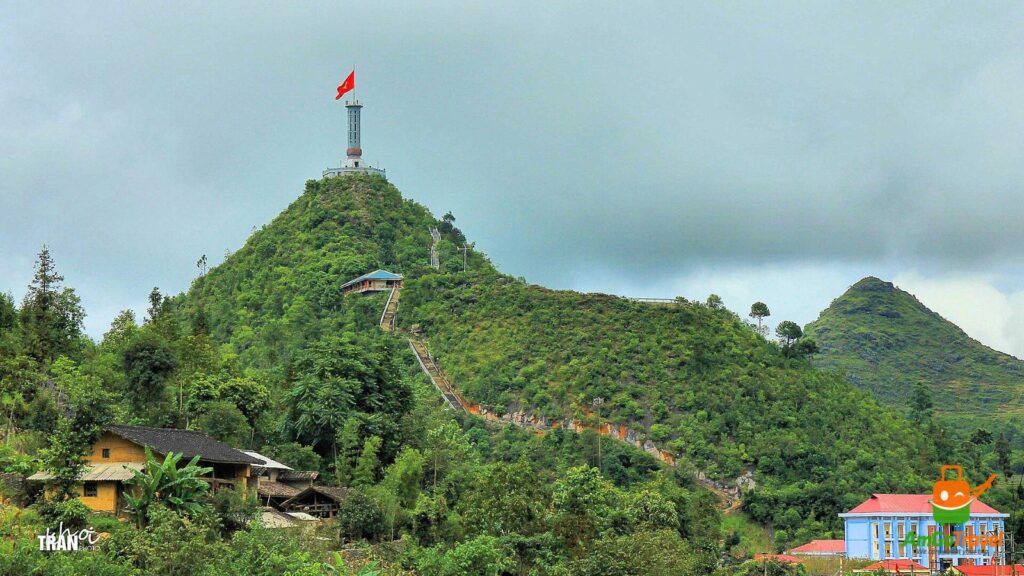
The flag tower on Rong (Dragon) Mountain marks the area close to Vietnam’s northernmost point. A few hundred steps take you to the top for a view over Lo Lo and Hmong villages and the border hills. Nearby Lo Lo Chai village is a lovely place to stay overnight.
Lung Cu Flag Tower above the rice terraces (Photo: Khoitran1957 / Wikimedia Commons, CC BY-SA 4.0)
4. Dong Van Old Quarter and the Vuong family mansion
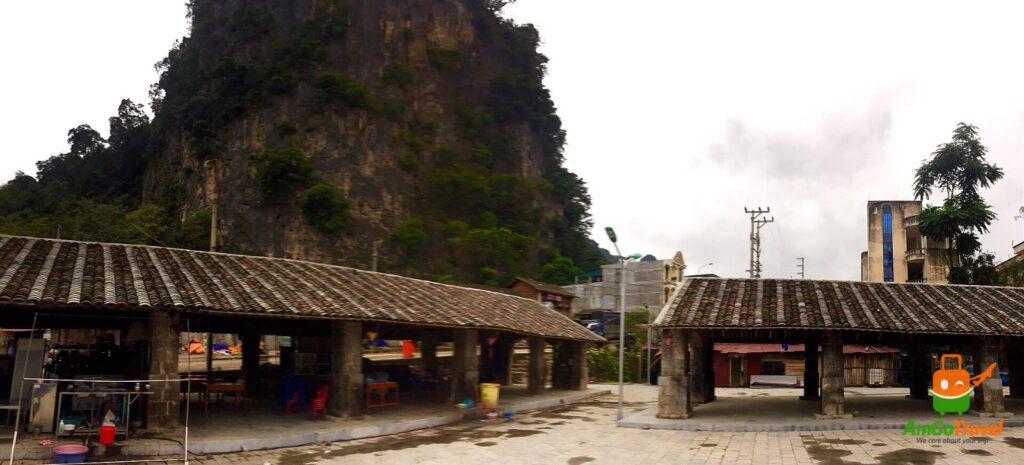
Dong Van is the main town of the plateau. Its small old quarter of tiled houses sits under a limestone cliff, and the weekly market brings in villagers from the surrounding hills. On the way, most tours stop at the Vuong family mansion in Sa Phin, the former residence of a Hmong ruling family, built in a mix of Chinese and Hmong styles.
Dong Van town at the foot of the karst cliffs (Photo: trungydang / Wikimedia Commons, CC BY 3.0)
5. Ma Pi Leng Pass and the Nho Que River
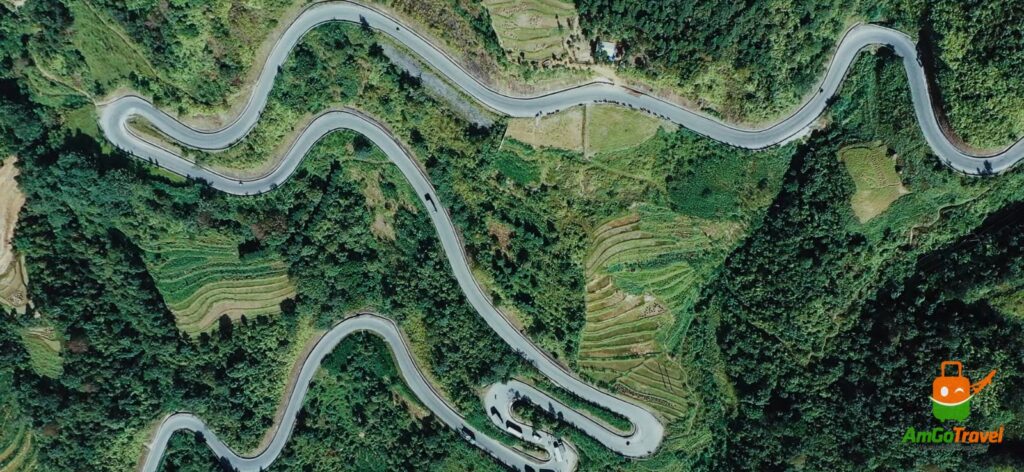
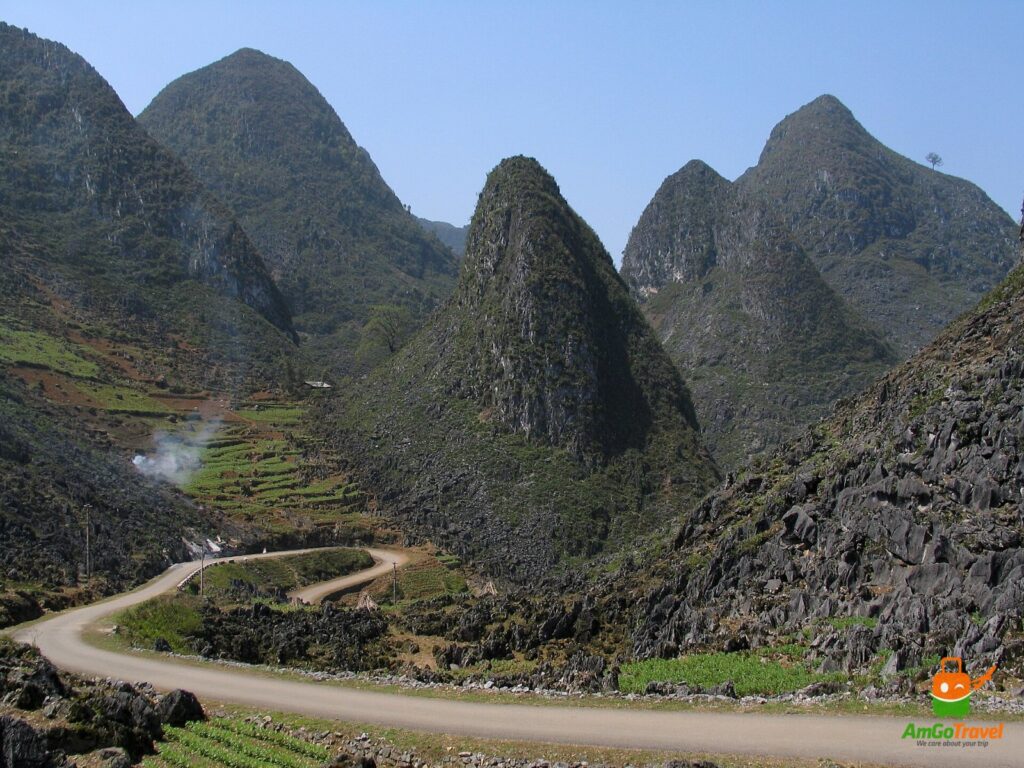
The roughly 20 km between Dong Van and Meo Vac is the most spectacular stretch of road in Vietnam. Ma Pi Leng is part of the “Happiness Road”, built by hand by thousands of volunteers between 1959 and 1965. From the pass you look down several hundred metres into the Tu San canyon and the emerald Nho Que River. In good weather, a boat trip on the river is well worth the detour.
The road over Ma Pi Leng Pass seen from the air (Photo: Cat Studio / Wikimedia Commons, CC BY 3.0)Limestone peaks along Ma Pi Leng Pass (Photo: Jaybeelarsay / Wikimedia Commons, CC BY-SA 3.0)
6. Meo Vac, Du Gia and the way back
From Meo Vac you can return directly to Ha Giang via Mau Due and Yen Minh, or take the quieter southern road through Du Gia, a peaceful valley with a natural swimming hole at Du Gia waterfall. The 4-day itinerary usually includes this section.
Remember to add the journey from Hanoi: the sleeper bus or limousine van to Ha Giang city takes around 6–7 hours, so most travellers take a night bus and start riding the next morning.
Best time to visit Ha Giang
September to November (best): dry, clear skies, golden rice in the lower valleys in September and pink buckwheat flowers on the plateau from about October.
February to April: spring, with plum and peach blossom in the villages. Mornings can be foggy.
May to August: green and lush but this is the rainy season; heavy rain can cause landslides, so build in a spare day.
December to January: cold, sometimes close to freezing on the plateau. Clear days are beautiful if you dress warmly.
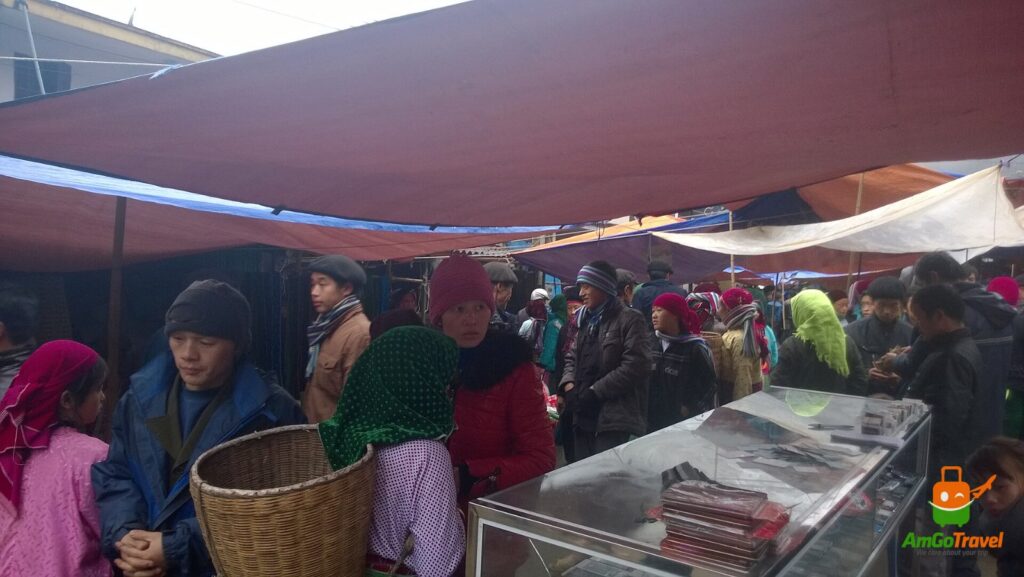
💡 Weekly markets are the soul of the plateau. Many, such as Dong Van and Meo Vac, are busiest on Sunday mornings, so plan your route to pass one if you can.
Self-ride, easy rider or car?
Riding yourself gives the most freedom, but the loop is steep, narrow and shared with trucks. Only consider it if you are an experienced rider holding a licence valid for motorbikes in Vietnam, and check that your travel insurance covers you.
An easy rider (you ride as a passenger behind a local driver) is what most of our guests choose. You get the same views and the open-air feeling without the risk, and your driver knows the roads, the weather and the best homestays.
A private car suits families, older travellers and the coldest months. You see the same highlights in comfort and can still stop wherever you like.
Safety and the 2026 rules
In April 2026, after a fatal accident involving a young foreign tourist, the provincial tourism authority tightened the rules for motorbike tours on the loop. Tours must be organised or sold by licensed travel agencies, follow an agreed itinerary with emergency plans, provide helmets and safety gear, and brief guests on safety before departure. For you, this means one simple thing: book with a licensed company and never with a driver who just approaches you at the bus station.
Always wear a proper helmet and closed shoes.
Do not ride after dark, in thick fog or after drinking “happy water” (local corn wine).
Keep your passport with you: homestays must register foreign guests.
Carry enough cash. ATMs exist in Ha Giang city and some district towns, but not in villages.
Market day in the highlands (Photo: Vuong Tri Binh / Wikimedia Commons, CC BY-SA 4.0)
What to pack
Warm layers and a windproof jacket: even in summer the passes are cool, and it is cold in winter.
A rain poncho and a waterproof cover for your bag.
Sunscreen and sunglasses for the high plateau.
A small backpack: most tours keep big luggage in Ha Giang city.
Power bank, motion-sickness tablets if you go by car, and basic medicine.
Respecting local culture
Ask before taking photos of people, especially children and the elderly. Dress modestly in villages, buy handicrafts directly from the makers and avoid giving money or sweets to children. Staying in a family homestay is one of the best ways to support local communities.
Yes, when you travel with a licensed operator, an experienced easy rider or a driver, wear safety gear and avoid riding at night or in bad weather. Most accidents involve inexperienced self-riders.
Do I need a permit for the Ha Giang Loop?
Rules for border areas can change. When you book with us, we check the current requirements and handle any paperwork, so you only need to bring your passport.
Can I do the Ha Giang Loop in 2 days?
It is possible but rushed, with very long hours on the road. We recommend at least 3 days so you have time to enjoy the viewpoints and the villages.
How do I get from Hanoi to Ha Giang?
By sleeper bus or limousine van in about 6–7 hours. We can book the transfer together with your loop tour.
Photo credits: NKSTTSSHNVN / Wikimedia Commons, CC BY-SA 4.0; Benjamin Smith / Wikimedia Commons, CC BY-SA 4.0; Khoitran1957 / Wikimedia Commons, CC BY-SA 4.0; trungydang / Wikimedia Commons, CC BY 3.0; Cat Studio / Wikimedia Commons, CC BY 3.0; Jaybeelarsay / Wikimedia Commons, CC BY-SA 3.0; Vuong Tri Binh / Wikimedia Commons, CC BY-SA 4.0. Photos edited with the AmGo Travel logo.